Monitoring Your Blood Pressure
Feel your best with essential tips for checking your blood pressure at home every day to protect your kidney health.
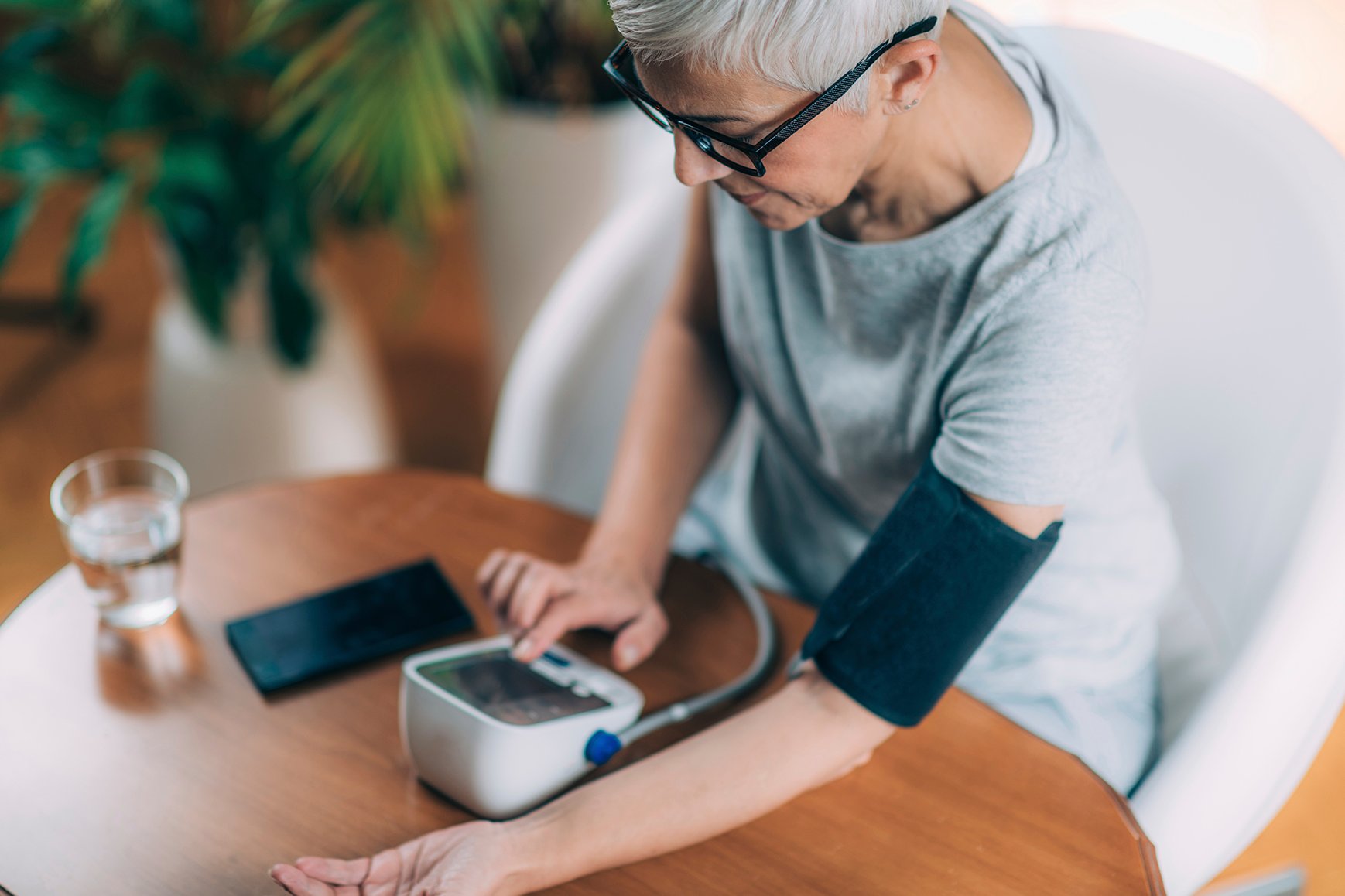
Monitoring your blood pressure
Feel your best by monitoring your blood pressure every day and keeping track of your numbers on your blood pressure log. High blood pressure can affect the health of your kidneys—and your overall health too.
Tips for measuring your blood pressure
- Measure your blood pressure at the same time every day.
- Make sure your cuff is the right size — too small or too large cuffs will give incorrect readings.
- Avoid caffeine, tobacco, alcohol, and exercise for 30 minutes before taking your blood pressure.
- Empty your bladder before taking your blood pressure.
- Sit quietly with your legs uncrossed for 3-5 minutes before checking your blood pressure.
- Take a repeat reading after one minute. Write your readings down on your blood pressure log.

Take your blood pressure every day!
Your blood pressure numbers
Your blood pressure has two numbers. The top number (systolic) measures the pressure put out when your heart beats. The bottom number (diastolic) measures the pressure between beats.

Track your numbers easily
Keeping a blood pressure log shows how your numbers change over time. It also helps your doctors see if your treatment is working and what might be causing any changes. Download the blood pressure log to track your blood pressure numbers.
How to use the log?
- Take two readings each time, 1-2 minutes apart, and record both on the log.
- Your blood pressure monitor should also show your heart rate. Add this number to your log as well.
- Bring your log when you visit your doctors.
Feel your best
Let your doctors know if your numbers change or if your systolic pressure is higher than 140 or lower than 90 mmHg.
This serves only as a guide. Talk with your healthcare provider for more information based on your health needs.